In the shadow of Anfield
A lifelong love of football
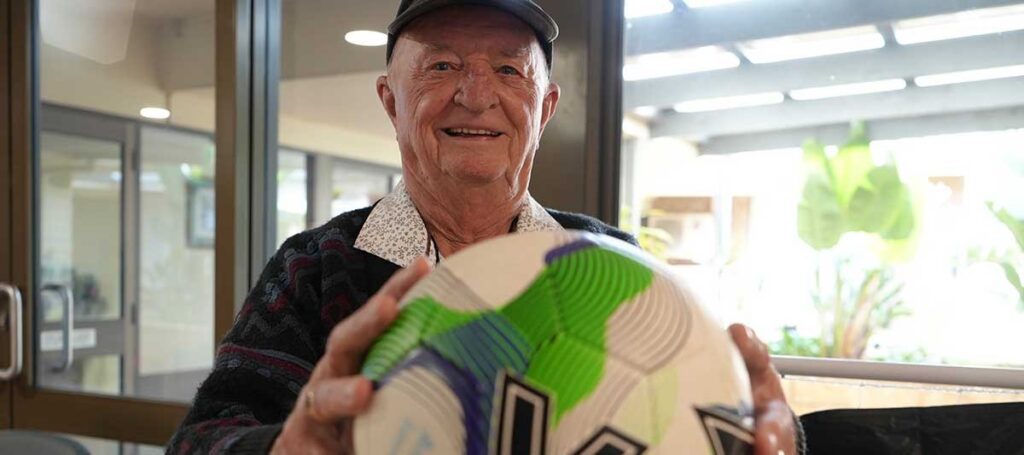
Paul Hughes’ love of football began in the shadow of Anfield, jostling among young supporters on what would later become the world-famous Kop.
The Perry Park resident remembers these days clearly.Paul was born in Liverpool and his father was an avid supporter of Liverpool Football Club. When football returned after the disruption of the Second World War, he took Paul to Anfield most weekends.
The world Paul first knew as a young football fan was a very different one.
There was no Premier League, no global broadcast schedule, no instant highlights.
But for a boy standing at Anfield, the game itself was enough: the movement, the noise, the crowd, the sense that the game belonged to something bigger than one small boy in a sea of 30,000 supporters.
Paul played football himself at school and later in the Air Force, though he is quick to keep his own ability in perspective. There was never a serious thought of becoming professional. He says he “wasn’t big enough” but just “a decent little player”.
Still, the game had a hold on him.
Paul first came to Australia through the Air Force in 1959, staying for a couple of years before returning to England to be discharged in 1961. In 1964, Paul returned to Australia permanently as a “ten-pound Pom”, part of the post-war assisted migration that brought more than a million British migrants to Australia between 1945 and 1972.
For Paul, the move also had a personal reason: he had met an Australian woman and came to Adelaide, where they married. Later, Paul married his second wife, Linda, with whom he would build a life that included family, retirement, Victor Harbor and many rounds of golf.
When Paul first arrived in Australia, following English football required patience.
There was no television coverage. Results and updates came through radio and newspapers, perhaps only a paragraph or two about English football.
“It was my first and usually only reason to pick up a copy of the ‘Tiser,” he laughed.
Technology changed that. Today, Paul can still follow Liverpool from Adelaide, staying up for selected matches depending on the time. If a game is too late, he will watch the highlights the next morning. If Liverpool lose, highlights are enough. If they win, he is more likely to watch the extended version.
“Big games like Cup finals, I’d definitely stay up for,” he said.
“I think the World Cup is going to impact my sleep patterns a bit but I’m looking forward to it.”
Football may have been Paul’s first sporting love, but it wasn’t his only one. After returning to Australia in 1964, he began following Central Districts in the SANFL. The club had just joined the competition, and Paul knew someone who played there.
“Back then, it was very relaxed you could even turn up and train with the team,” he said.
When the Adelaide Crows entered the AFL, Paul followed them too.His attachment to sport was never limited by code. Soccer, Aussie Rules, golf; each offered something different.
Golf became another lifelong companion. Paul’s father introduced him to the game in England, where the family lived near a small course. Years later, after retiring , Paul and Linda moved to Victor Harbor, where their home backed onto a golf course.
Linda did not play, but she was part of the ritual. Twice a week, she would drive the buggy while Paul played. It was, he says, “a lovely lifestyle”.
Even so, there is something about football that keeps drawing him back, perhaps because it can turn on one unpredictable moment.
“In football, anything can happen,” Paul says. “A deflection, a scramble in the box it only takes one moment.
In 2026, the Football World Cup returns in a new expanded format, co-hosted across Canada, Mexico and the United States from 11 June to 19 July, with 48 teams competing on football’s biggest stage.
Paul will be watching. England remains his team, though he admits to having a soft spot for Australia. That dual affection feels fitting for someone whose story has stretched from Liverpool to Adelaide, from Anfield terraces to Australian sporting culture, from English football tradition to local community life.
The World Cup competition at ACH Group
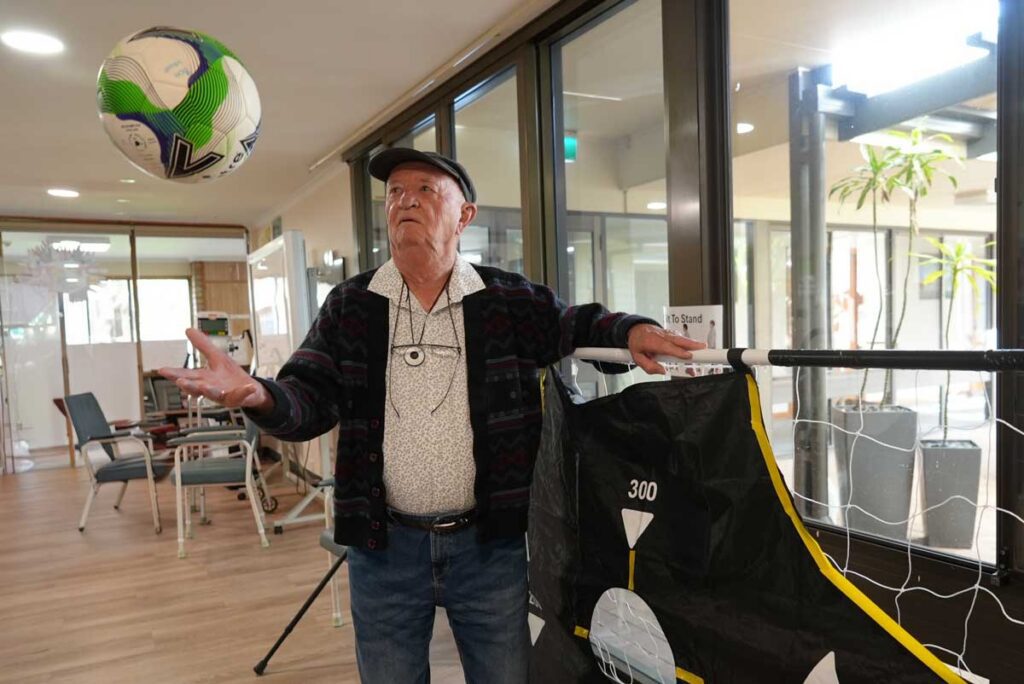
For ACH Group, the World Cup is also an opportunity to bring people together through a friendly penalty shootout competition, a simple, inclusive activity that captures the fun of football without needing the full 90 minutes.
And for Paul, the penalty spot is a fitting symbol. Football has always been about moments: a goalmouth scramble, a lucky deflection, a single strike that changes everything. A penalty shootout distils that drama into one act: step forward, focus, and take your chance.
It is not hard to imagine Paul appreciating that. After all, sport has been there at nearly every stage of his life: in childhood with his father at Anfield, in the Air Force, in the move to Australia, in the SANFL and AFL, on the golf course with Linda, and now in the anticipation of another World Cup.
“Absolutely,” Paul says, when asked whether sport has always been a big part of his life.
“Whether it’s football, Aussie Rules, or golf, it’s just a love of sport.
“It has been ever since I stepped into the shadow of Anfield.”
Social and wellbeing program
Residential care
The World Cup Penalty Kick competition is one of the special events organised for residents across all ACH Group residential care homes.
The experiences provide residents with the opportunity to meet new people in a fun and welcoming environment, learn new skills or revitalise past ones, and to live full and active lives.
See the latest edition of the Social and Wellbeing Guide – Residential Care.